

 Deutsch
 Italiano
 русский
  Français
 日本語
日本語 عربي
عربي  Español
 Português
 فارسی
فارسی Ελληνικά


Prefab House
Our factory locates in Xiaoshan district, which has about 15000 SQM factory mainly manufacture Prefab Houses since 2007. We have years rich experience in providing Prefab Flat Pack Container Houses, Temporary Container Office, Ablution Block Container Toilet / Shower room, Container Dining Hall. Container Classroom. Modifed Sea Shipping Container House. Container Hotel, Telecom Shelters, and Light Gauge Steel Vllas AII of our productions are under the standard of GB/T ISO- 9001 2008. and materials pass CE & TUM & SGS inspection.
Fully Customize Service
We have a highly qualified engineer team for technical support.Our tenet is to offer attentive services, supporting clients product quality & service higher than expected.
Rich Experience
We have advanced production equipment and detection systems, sound sales networks and specialized technical site installation workers.
Quality Assurance
We only offer top quality products, considerate service and timely delivery.With our advanced technology and manufacturing equipment, they are developed from several safety, high temperature resistance, wear resistance and other requirements.
Certificate
All of our productions are under the standard of GB/T ISO-9001:2008, and materials pass CE & TUV & SGS inspection.


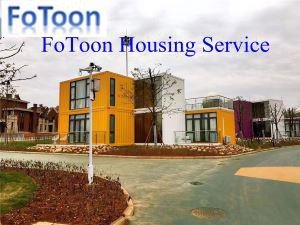

What Is A Prefab House
A prefab house is a home that is built in a construction facility and then transported to the home site for finishing touches. You may also hear them referred to as "off-site built homes." This is different from a traditional site-built home that is constructed entirely on the home site.
Design Flexibility
Prefab house designs offer a range of house floor plans to choose from, with hundreds of options to customize the home of your choice. Depending on your local building codes, you can modify the floor plan to fit your design specifications, whether it is a single-story or multi-story home.
Reduced Construction Time
The construction time for a modular home is typically about 30% of the time it takes to build a site-built home. This is because both the foundation (on-site) and the house construction (factory) can be done simultaneously, saving a significant amount of time over a site-built home. Additionally, unlike a site-built home, there are no delays due to weather restrictions, material theft, or contractor issues.
Reduced Construction Costs
Prefab houses are much cheaper than site-built homes. This is because manufacturers typically purchase building materials in bulk (at a discount), and the additional savings are reflected in the cost of the finished home. Additionally, because prefab homes take less time to build, interest payments on the home loan are significantly reduced, reducing construction costs.
Consistent Quality
Because prefab houses are made in a controlled manufacturing environment and adhere to specific standards, the subcomponents of the structure will be of consistent quality. Site-built structures are subject to different levels of competence and schedules of independent contractors. All of these factors affect the overall quality and workmanship of a particular building. Each sub-component is constructed by a skilled workforce in a weather-resistant facility and undergoes multiple quality checks throughout the process. To maintain building code compliance, some building components are manufactured using precision mechanical equipment.
Environmentally Friendly
Prefabricated homes use less material than traditional homes. Excess materials can be reused for other homes. Additionally, if a modular home is disassembled, the prefabricated home can be reused to build another home or saved for future building projects. This means that this technique produces very little waste and has a minimal impact on the environment.
Different Types of Prefabricated Building Methods
Panelization
This method involves building building components such as walls, floors, and roofs in a factory setting, which are then transported to the construction site for assembly. This method can be used to build various types of buildings, including single-family homes, multi-family residential buildings, and commercial buildings.
Modular construction
This method involves building complete building units, such as rooms or entire floors, in a factory setting, which are then transported to the construction site for assembly. This method is often used for multi-story buildings, such as hotels, apartments, and dormitories.
Volumetric construction
This method involves building complete building units, such as rooms or entire floors, in a factory setting, which are then transported to the construction site for assembly. This method is similar to modular construction, but the units can be easily reconfigured to accommodate changing needs.
Prefabricated MEP
This method is used to manufacture and assemble mechanical, electrical, and plumbing systems off-site, which are then transported to the construction site for installation. This method can reduce the time spent on a project and improve the quality of the building, while also reducing costs.
Prefabricated facades
This method is used to manufacture and assemble building exterior elements, such as cladding, windows, and curtain walls off-site, which are then transported to the construction site for installation.
Container construction
This method involves using shipping containers as the structural frame of a building and can be used for many types of buildings. This method is fast, environmentally friendly, low-cost, and customizable.
What are the Common Styles of Prefab Houses?


Ranch House
A ranch house is a one-story home that is rectangular in shape and is typically wider than it is deep. The plain exterior with minimal decoration is a blend of modernism and the American West period. This is the most common style of modular home, accounting for over 60% of all modular homes produced in 2015 and over 90% of prefabricated homes built.
Cape Cod Home
The Cape Cod is a design style that originated in 17th century New England. It has a low, wide frame with a moderately steep pitched roof, gables, and oversized chimneys. They are typically one and a half stories tall and have minimal exterior decoration. Cape Cod homes are available from selected modular home manufacturers, primarily in the Northeastern United States. Nationally, Cape Cod homes account for less than 15% of the modular home and prefabricated home industries.
Colonial Home
The Colonial architectural style is based on common architecture from the 16th to 19th century American Colonial period. The style typically includes steep roofs, abundant exterior decoration, a central chimney, and a double-pitched roof. Colonial style homes are offered by a limited number of modular home and prefab home builders, primarily in the southeastern United States. Colonial style homes make up less than 10% of the modular home and prefab home industry.
Contemporary Homes
Contemporary style represents something that is currently being created, so technically, contemporary styles are always changing. Due to this rapid change in style, the result can be a wide variety of designs. However, for modular and prefab homes, we define it as the latest modern construction. Contemporary style homes make up less than 12% of all homes; however, they are the style segment with the largest growth in the prefab home sector.
2-Story Homes
The two-story style represents modular homes or prefab homes that are built with two or more floors (excluding basements). Two-story homes can span multiple style areas but are often associated with traditional building styles.
Chalet Homes
Chalet is a design style based on a common architectural style found in the Alpine region of Europe. Typically, these homes are made of wood and have heavy, flat roofs with wide eaves that are at right angles to the front of the home. It is often associated with vacation properties near mountains or beaches. Chalet style makes up less than 3% of all modular or prefab home construction in North America.
Green Homes
Green buildings refer to homes that are built using sustainable construction methods and place a high priority on resource-efficient living. All modular and prefabricated homes follow "green" building processes and construction materials. Within the industry, the term is used to describe homes that exceed current green standards of building codes. Due to the energy efficiency of all prefabricated homes, more than 99% of factory-built homes in North America meet environmental standards. Because green classifications go beyond common green practices, there is no data available to clearly define percentages.
Tiny Homes and Park Models
Both tiny homes and park models are considered recreational vehicles capable of regular transportation, but are designed for more long-term placement. Park models must stay under 400 square feet to be considered recreational vehicles, otherwise they are classified as prefabricated homes. Park models are often manufactured by the same manufacturing companies and even in the same facilities as prefabricated and modular homes. This gives park models a more residential look and feel than traditional recreational vehicles, especially travel trailers or "fifth wheels." On the other hand, due to being classified as RVs, some units can have retractable slide-out structures.
Log Homes
Log homes and cabins are homes that are designed to provide a rustic or natural look and feel. Most modular and prefabricated homes can have artificial and natural log siding added to give them a more rustic appeal, depending on consumer preference. Unfortunately, there is no data available for prefabricated log homes, log siding, or cabins.
5 Things You Need to Know Before Buying a Prefab House
Let’s take a closer look at a few factors you should keep in mind when looking for a prefab home for you or your clients.
So how long does it take from purchase to move-in? There are a lot of factors to consider. If you already own a property that doesn’t require a lot of excavation and site work, if you’re choosing a simple foundation without a basement or are purchasing a prefab or modular home with limited customization then you can expect it to take anywhere from a few weeks to a few months. If you’re happy with a standard floor plan package, some manufacturers may even have a mobile or modular home already built and waiting to be transported to the property. But in most cases, you’ll have to wait 3-4 months for construction to be completed. If you plan properly, you can do site work on the property while the home is being built at the factory. Then, it will take anywhere from a few days to a month or two to assemble the home on the site.

Prefab homes come in all shapes and sizes

Try not to have any preconceived ideas about prefab homes. When you start looking at different options, you’ll find that the possibilities are endless and you’ll likely find one that works for you or your clients. If you prefer speed, then go for a prefab or modular home. They’re faster to build and quicker to assemble on site. If sustainability is a priority for you, then go for something like a prefab container home. If you or your clients are looking for an affordable, energy-efficient home, then go with a prefab tiny house. If you have the skills and means to build your own home, a kit home can provide you with the exact parts you need. You only need to provide the labor.
If you or your clients want to customize a prefab home, don’t wait until the home is built to start remodeling. Check with the manufacturer to see what customization options are available during the construction process. More and more people are looking to express their individuality through their homes, and prefab home manufacturers are rising to the challenge by offering more customization options than ever before. While customization does increase the initial cost of the home, it’s cheaper than remodeling it to your needs later.

Frequently Asked Questions

